Essential Tips for Choosing Backup Power for Home?
When considering backup power for home, many factors come into play. It's essential to understand your needs clearly. Backup power solutions vary widely. From generators to battery systems, each option has unique benefits. Still, they also have limitations.
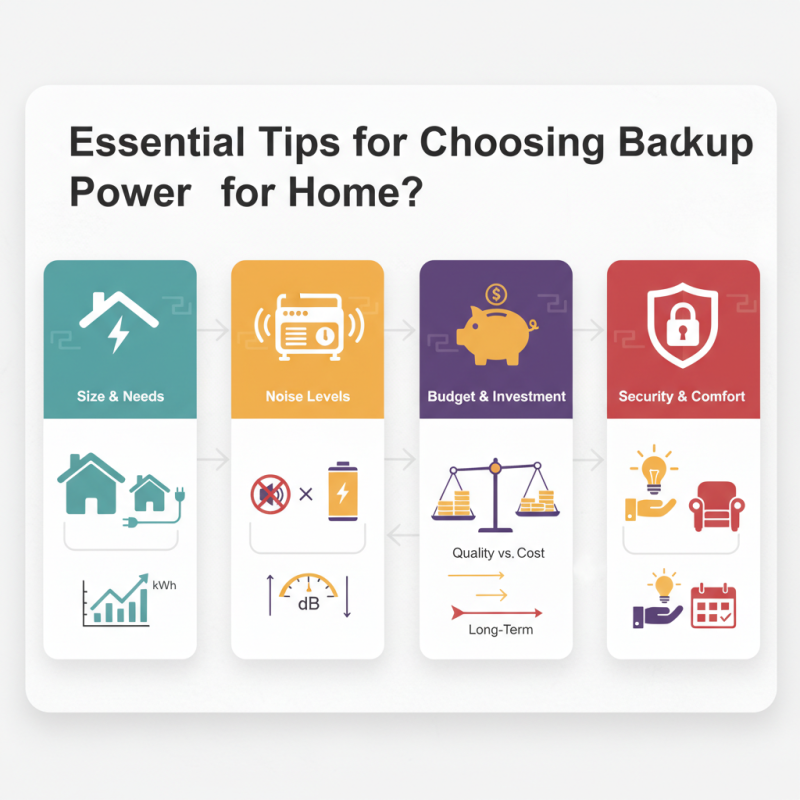
Many homeowners overlook critical details. For instance, the size of your home and energy requirements matter. A small unit may not suffice for larger households. Noise levels can also be a concern. Some generators produce excessive noise, disrupting your peace.
Take time to assess your budget. High-quality systems can be costly but often last longer. Cheaper options might seem attractive, yet they may lack reliability. Reflecting on your long-term needs is crucial. Ultimately, backup power for home is an investment in security and comfort.
Understanding Your Home's Power Needs
Understanding your home's power needs is crucial when selecting backup power. Start by assessing your essential appliances. Consider items like refrigerators, lights, and heating systems. Each has different energy requirements. Calculate the wattage of these devices. This will give you a baseline for your backup power needs.
Next, think about your lifestyle. Do you work from home? Do you have medical devices that require electricity? Candidates for backup power may differ based on personal circumstances. Don't forget about peak usage times. It's easy to underestimate how much power you need during a blackout.
Lastly, reflect on the duration of outages in your area. Some regions experience prolonged outages. Others may have short disruptions. This can influence the type of backup system you choose. A power bank may be sufficient for brief outages, while a generator might be necessary for longer periods. Remember, getting it right requires some trial and error. Your choices should ultimately align with your unique power requirements.
Evaluating Different Types of Backup Power Systems
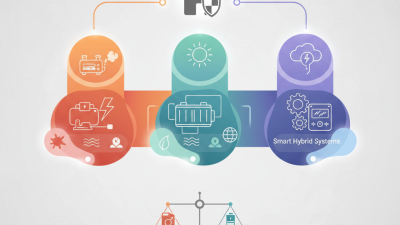
Choosing a backup power system for your home is crucial. Various types exist, and each has unique benefits. Generators, for example, can provide substantial power but are often loud and require fuel. According to a recent report by the U.S. Energy Information Administration, about 21% of U.S. households use some form of backup power.
Batteries have gained popularity. They are quieter and cleaner. However, their initial cost can be significantly higher. A study by Navigant Research shows that battery storage systems are expected to grow at a compound annual growth rate of over 20% until 2023. It's essential to consider battery capacity and lifespan in your decision-making process. Depending on usage, some may find batteries inadequate during prolonged outages.
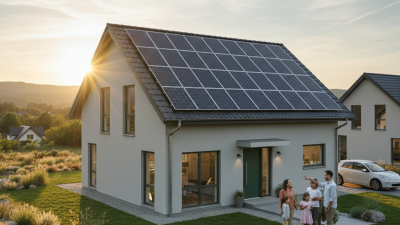
Solar power is another option, especially for eco-conscious families. It can pair with batteries for a sustainable solution. Still, initial installation costs can be daunting. The average solar panel system ranges from $15,000 to $25,000. Homeowners should evaluate their energy needs carefully before making a switch. Each backup power system has its trade-offs, emphasizing that careful consideration is necessary.
Backup Power Systems Comparison
This chart compares the estimated costs of different backup power systems for homes. Traditional generators are generally more expensive, while battery backups and UPS options provide more flexible and immediate solutions.
Key Features to Consider in Backup Power Solutions
When choosing backup power for your home, several key features are crucial. According to a recent industry report, 36% of homeowners feel unprepared for power outages. Therefore, it’s essential to evaluate capacity, run time, and fuel source.
Tip 1: Assess your energy needs accurately. Calculate the wattage of all devices you want to power. A common mistake is underestimating this number. Consider adding 25% extra for future needs.
The fuel type can significantly impact your decision. Gasoline is readily available, but natural gas units offer convenience. Reports indicate that around 28% of users prefer natural gas for its reliability.
Tip 2: Think about maintenance requirements. Some units need more regular upkeep than others. Don’t overlook the noise levels. For residential areas, quieter systems are generally more desirable, but they may come at a higher cost.
Evaluating these features can prevent frustrations during power outages. Make informed choices by weighing all options critically. It’s about finding a balance between reliability and cost.
Assessing Budget and Cost of Backup Power Options
When considering backup power for your home, budget plays a crucial role. Start by determining how much you can afford to invest. Backup power systems vary greatly in price. Some options are surprisingly affordable, while others can break the bank. It's essential to evaluate your financial limits before shopping.
Think about the long-term costs, not just the initial expense. Fuel costs add up quickly. Maintenance is another consideration. Some systems require little upkeep, while others demand regular checks. Factor these ongoing costs into your budget. Consider how often your area experiences power outages. A reliable estimate can help guide your choice.
Additionally, think about the necessary capacity. How many devices do you need to power? Each device has a specific wattage. Understanding your power needs will help you choose the right system without overspending. Don't forget about installing costs, which can also inflate your budget. Reflect on the overall value that backup power will provide for your situation.
Essential Tips for Choosing Backup Power for Home
| Backup Power Option |
Initial Cost (USD) |
Installation Cost (USD) |
Maintenance Cost (Annual USD) |
Fuel Type |
Run Time (Hours) |
| Gas Generator |
800 |
200 |
150 |
Gasoline |
8 |
| Solar Generator |
1200 |
300 |
100 |
Solar |
Unlimited (Daytime) |
| Diesel Generator |
1500 |
400 |
200 |
Diesel |
10 |
| Portable Battery |
600 |
50 |
50 |
Electric |
6 |
| Whole House Generator |
5000 |
800 |
250 |
Natural Gas |
24 |
Maintenance and Safety Tips for Home Backup Power Systems
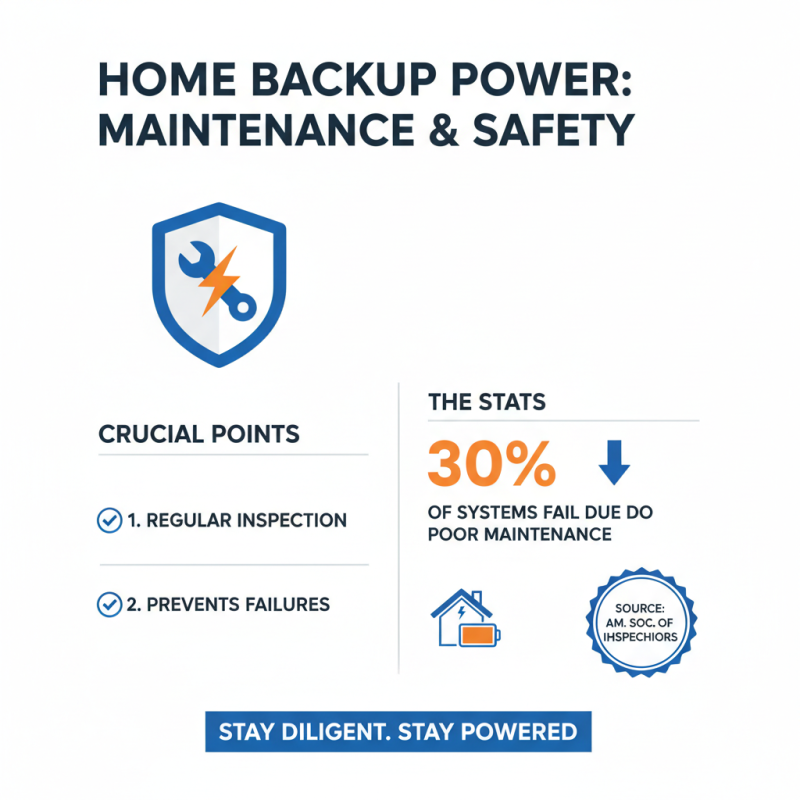
When choosing a backup power system for your home, maintenance and safety are crucial. Regular inspection is essential. According to a report from the American Society of Home Inspectors, approximately 30% of residential backup systems fail due to poor maintenance. This is a significant number, highlighting the need for diligence.
Keep your equipment clean and check connections regularly. Dust can build up, causing inefficiencies. Fuel systems should be inspected often. Storage conditions matter; improper storage can reduce fuel quality. Furthermore, battery systems need proper care. Over time, batteries can degrade, losing their ability to hold a charge.
Safety cannot be overlooked. Familiarize yourself with the manufacturer's guidelines. A staggering 65% of user accidents involve improper setup. Ensure your system has ventilation to prevent carbon monoxide buildup. It’s crucial to install CO detectors in your home. The National Fire Protection Association recommends these precautions to avoid risks. Regular maintenance not only ensures performance but also protects your home and family.