How to Install Home Solar Panels for Maximum Savings?
Installing home solar panels can lead to significant savings. With increasing energy costs, many homeowners are turning to solar solutions. It's an investment that pays off over time.
Choosing the right solar panel system is crucial. It requires careful planning and understanding of your energy needs. Not all homes are suited for solar, and some may have challenges like shading or roof orientation.
Researching local incentives is also important. Many places offer tax credits or rebates for installing home solar systems. However, navigating these options can be overwhelming. Missteps could lead to missed savings. Assessing your situation and goals is essential. Home solar is a step towards energy independence.
Understanding the Basics of Home Solar Panels and Savings Potential
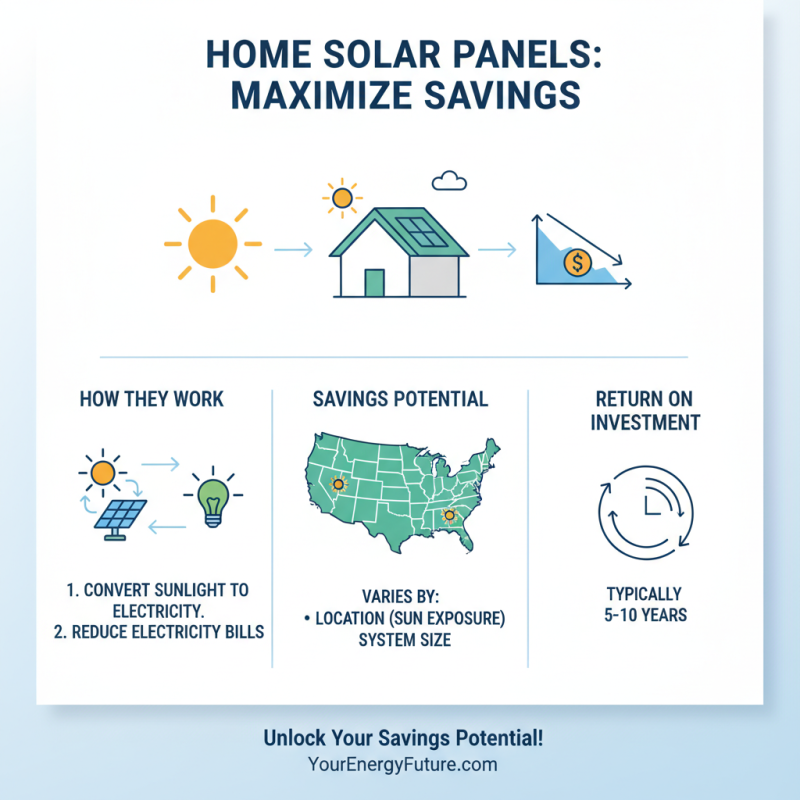
Understanding home solar panels is key to maximizing your savings. These systems convert sunlight into energy, reducing your electricity bills. The savings potential varies by location and system size. Many homeowners see a return on investment within five to ten years.
Tips: Assess your roof's orientation and sun exposure. South-facing roofs tend to receive the most sunlight. Consider your energy consumption patterns. Analyze peak usage times to optimize solar panel efficiency.
Remember, installation requires careful planning. Not every house is ideal for solar panels. Some roofs may have shading issues or structural concerns. You may face challenges during installation. It’s crucial to ensure your system is optimized for maximum performance. Small mistakes can lead to larger losses in savings over time.
Tips: Research local incentives. Some areas offer tax credits for solar installation. Calculate your long-term savings before committing. This helps avoid unexpected costs and allows for adjusted expectations.
Assessing Your Home's Suitability for Solar Panel Installation
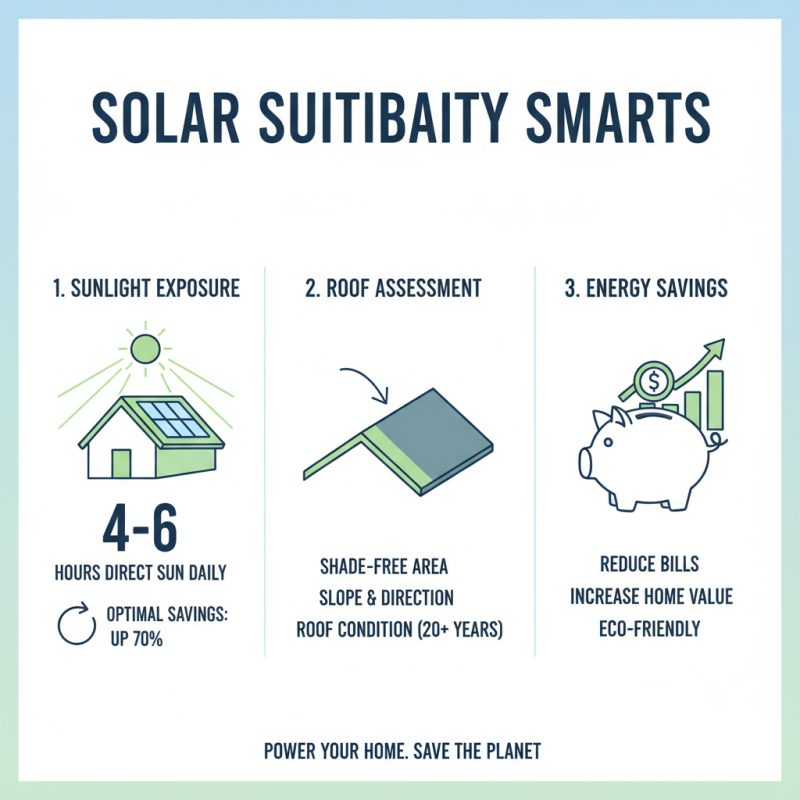
Assessing your home’s suitability for solar panel installation is crucial for maximizing savings. Start by evaluating your roof. Look for enough sunlight exposure. Ideally, solar panels require 4 to 6 hours of direct sunlight daily. A study suggests homes with optimal sunlight can save up to 70% on energy bills.
Check the roof’s condition. If it needs repairs, addressing them before installation is essential. Solar panels last for about 25 years, so ensure your roof can support them during that time. Additionally, consider the angle of your roof. A south-facing roof is most effective for solar energy production.
**Tip 1:** Remove any obstructions. Nearby trees or buildings can cast shadows on your panels. This reduces their efficiency, impacting savings.
**Tip 2:** Investigate local regulations. Some areas have restrictions on panel placements. Researching these rules beforehand saves time and money later.
While assessing suitability, remember that not every home is ideal for solar panels. If your roof is too shaded or small, saving options may be limited. Reflect on your home’s unique characteristics to make informed decisions.
Choosing the Right Solar Panels and Equipment for Your Needs
When choosing the right solar panels and equipment, it’s essential to consider your individual needs. Not all panels are created equal. Some are more efficient, while others might be budget-friendly. Think about your energy consumption. Are you looking to power your entire home or just reduce costs?
**Tips:** Research the efficiency ratings of different panels. High-efficiency panels can save space but often cost more upfront.
Next, consider the inverter type. A good inverter ensures efficient energy conversion. Some models are easier to install. Others come with advanced monitoring features. Weigh these options based on your comfort level with technology.
**Tips:** Ask yourself: Will I need help later? Prioritize user-friendly equipment if you prefer low maintenance.
Finally, think about the installation type. Roof-mounted systems save space but may need structural considerations. Ground-mounted systems offer flexibility but require more land. Reflect on your long-term goals and the space available. Making the right choice is crucial for maximizing savings.
How to Install Home Solar Panels for Maximum Savings? - Choosing the Right Solar Panels and Equipment for Your Needs
| Type of Solar Panels |
Efficiency (%) |
Cost per Watt ($) |
Lifespan (Years) |
Warranty (Years) |
| Monocrystalline |
15-22% |
$0.70 - $1.50 |
25 |
25 |
| Polycrystalline |
13-16% |
$0.60 - $1.20 |
20 |
25 |
| Thin-Film |
10-13% |
$0.50 - $1.00 |
10-20 |
10-25 |
Steps to Install Solar Panels: A Detailed Guide
Installing solar panels can lead to significant savings on energy bills. However, the process requires careful planning. Begin by assessing your home's energy needs. The average American household uses about 877 kWh per month. This figure is crucial for determining the number of panels needed.
Next, conduct a roof inspection. Is your roof facing the right direction? South-facing roofs generally capture the most sunlight. Shade from trees can hinder efficiency as well. According to a study, a shaded solar panel can produce up to 50% less energy. Consider these factors before proceeding with installation.
Finally, research local regulations. Some areas have specific requirements for solar installations. Permits may be needed, and local incentives could influence costs. Many homeowners overlook incentives, potentially missing out on significant savings. Reflect on these details. With thorough planning, solar panels can be a wise investment for energy independence.
Calculating Long-Term Savings and Benefits of Solar Energy
Installing home solar panels can lead to significant long-term savings. The average American homeowner can save around $20,000 over 20 years. This figure fluctuates depending on local electricity rates and your solar system's size. According to the National Renewable Energy Laboratory, a well-designed solar installation can produce over 80% of a household’s electricity needs.
Consider the system costs and potential savings carefully. Professional estimates suggest a solar payback period of 5 to 10 years, depending on incentives and energy prices. Take into account maintenance costs. While solar panels are durable, they can require occasional cleaning or repairs.
Tips: Research local tax incentives. Some areas offer substantial rebates. Also, analyze utility rates over time. If rates rise, your solar savings will increase. Think about your energy consumption. Are there ways to reduce your usage? This can enhance your long-term savings even further. Balance these factors for a well-rounded approach to your solar investment.