10 Best Solar Batteries for Home in 2026
Home energy storage is moving from a niche upgrade to a practical part of residential solar. The International Energy Agency reported that global battery-storage additions grew by about 130% in 2023, reaching nearly 42 GW. BloombergNEF also reported that lithium-ion battery-pack prices fell to approximately $115 per kWh in 2024. These figures show stronger supply and improving economics, but household prices remain higher after installation, controls, and labor.
This guide evaluates the 10 Best Solar Batteries for Home in 2026 through a homeowner’s lens. We examine usable capacity, round-trip efficiency, warranty terms, safety, backup performance, software, and installer support. A battery should keep essential circuits running during an outage, not merely display an impressive capacity number. Consider a refrigerator, router, medical device, and several lights operating after sunset. Small details matter.
Dr. Imre Gyuk, a leading U.S. Department of Energy energy-storage expert, has described storage as “the key to unlocking the full potential of renewable energy.” His point remains relevant. Solar panels generate power by daylight, while families often need it at night. Yet no ranking is perfect. Local electricity rates, climate, roof production, and utility rules can change the outcome. The National Renewable Energy Laboratory also warns that battery performance depends on operating conditions and system design. Therefore, this selection balances published specifications with real-world ownership concerns. Some models look excellent on paper but may disappoint without skilled installation or clear warranty support. That is worth questioning.
What a Home Solar Battery Is and How It Stores Energy
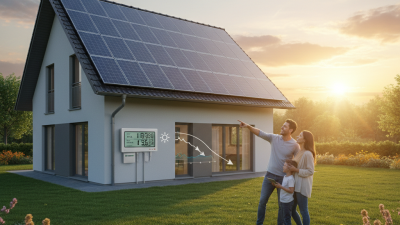
A home solar battery stores electricity that rooftop panels produce but the household does not immediately use. During sunny hours, an inverter sends surplus power into the battery as chemical energy. After sunset, the battery reverses that process and supplies electricity through the inverter. It is quiet, physical, and less magical than many advertisements suggest.
Battery capacity is measured in kilowatt-hours, while output power is measured in kilowatts. A 10 kWh battery may not deliver all 10 kWh, because manufacturers reserve some energy to reduce degradation. Depth of discharge shows how much capacity is safely usable. The National Renewable Energy Laboratory reports typical lithium-ion round-trip efficiency near 85% to 95%, meaning some energy disappears during charging and conversion. Small losses still matter over many years. (NREL, Storage Futures Study)
The International Energy Agency reported that global battery storage additions in the power sector reached about 42 GW in 2023, more than twice the previous year. (IEA, Batteries and Secure Energy Transitions, 2024) Home systems benefit from the same technology, but household demand is less predictable. A battery sized only for evening lighting may disappoint during a heatwave. A larger unit may sit partly unused. That is the uncomfortable detail: “best” depends on load patterns, backup needs, local weather, and tariff rules. Safety also requires certified equipment, correct ventilation, and professional installation.
10 Best Solar Batteries for Home in 2026
What a Home Solar Battery Is and How It Stores Energy
Battery chemistry affects how much stored energy can be used and how many charge-discharge cycles a system may provide. Lithium iron phosphate batteries generally offer high usable depth of discharge and long cycle life, while lead-acid batteries typically require a shallower discharge to preserve service life.
The chart uses representative midpoints of commonly reported residential ranges, not brand-specific specifications. Actual performance varies with temperature, installation quality, operating settings, and battery age.
Key Factors for Choosing a Solar Battery in 2026
Choosing among the 10 best solar batteries for home in 2026 requires more than comparing storage size. Usable capacity matters more than advertised capacity. A 10-kilowatt-hour battery may provide less after reserve limits and conversion losses. Check continuous power output, especially if your home uses pumps, refrigerators, or electric heating. Battery chemistry also affects safety, lifespan, weight, and installation space. Request the full datasheet, not only the sales summary.
Your solar battery should match your daily energy pattern and inverter. Oversizing can leave expensive capacity unused. Undersizing may cause frequent grid imports during cloudy evenings. Review round-trip efficiency, cycle life, temperature range, warranty terms, and degradation assumptions. Certified protection systems and qualified installation are essential. Monitoring software should show charge levels, backup events, and performance changes. Still, laboratory ratings rarely match every household. Seasonal weather and unusual appliance use can change the result.
Tips: Measure electricity use for several weeks before choosing. List essential loads separately. Ask an installer to model winter production and outage demand. Leave ventilation and service access around the unit. Do not assume maximum backup time is the best value. A smaller battery with better daily cycling may suit your home. Recheck the estimate after one year, because real usage often differs from the original plan.
10 Best Solar Batteries for Home in 2026 - Key Factors for Choosing a Solar Battery in 2026
| Rank |
Battery Category |
Best Use Case |
Typical Usable Capacity |
Continuous Power |
Round-Trip Efficiency |
Battery Chemistry |
Expected Cycle Life |
Typical Warranty |
Weather Protection |
Key Selection Advantage |
| 1 |
High-Capacity Whole-Home Battery |
Large homes with high evening loads and frequent outages |
20–30 kWh |
10–15 kW |
90–95% |
LiFePO₄ (LFP) |
6,000–10,000 cycles |
10–15 years |
Usually IP65 or higher |
Maximum energy reserve and strong long-term durability |
| 2 |
Modular Expandable Battery |
Homes that may increase storage capacity over time |
10–40 kWh |
5–20 kW |
90–95% |
LiFePO₄ (LFP) |
6,000–8,000 cycles |
10–15 years |
IP55–IP66 |
Flexible sizing without replacing the complete system |
| 3 |
High-Power Backup Battery |
Homes requiring backup for pumps, HVAC systems, and power tools |
10–20 kWh |
8–15 kW |
88–94% |
LiFePO₄ (LFP) |
5,000–8,000 cycles |
10–15 years |
IP65 or higher |
High surge capability for demanding appliances |
| 4 |
Compact Apartment Battery |
Small homes, apartments, and limited installation spaces |
5–10 kWh |
3–7 kW |
90–95% |
LiFePO₄ (LFP) |
5,000–8,000 cycles |
10 years |
IP54–IP65 |
Small footprint and lower installation complexity |
| 5 |
Solar Self-Consumption Battery |
Reducing evening electricity purchases in grid-connected homes |
8–16 kWh |
4–8 kW |
92–96% |
LiFePO₄ (LFP) |
6,000–10,000 cycles |
10–15 years |
IP65 |
Excellent daily charge-and-discharge efficiency |
| 6 |
Off-Grid Solar Battery Bank |
Remote homes without dependable utility-grid access |
15–50 kWh |
5–20 kW |
85–94% |
LiFePO₄ (LFP) |
6,000–10,000 cycles |
10–15 years |
IP65 or higher |
Large reserve capacity and compatibility with generator charging |
| 7 |
Time-of-Use Optimization Battery |
Regions with high evening tariffs or demand charges |
10–25 kWh |
5–12 kW |
90–95% |
LiFePO₄ (LFP) |
5,000–8,000 cycles |
10–15 years |
IP55–IP65 |
Stores low-cost solar energy for expensive tariff periods |
| 8 |
Cold-Climate Solar Battery |
Homes exposed to freezing winters and outdoor installation |
10–20 kWh |
4–10 kW |
88–95% |
Low-temperature-rated LiFePO₄ |
5,000–8,000 cycles |
10–15 years |
IP65; heated enclosure recommended |
Battery heating and cold-weather charging protection |
| 9 |
Hot-Climate Outdoor Battery |
Warm regions where equipment is installed outdoors |
10–25 kWh |
5–12 kW |
88–94% |
LiFePO₄ (LFP) |
5,000–8,000 cycles |
10–15 years |
IP65 or higher; shade recommended |
Thermal management and broad operating-temperature range |
| 10 |
Essential-Loads Backup Battery |
Backing up refrigerators, lighting, internet, and medical equipment |
5–15 kWh |
3–8 kW |
90–95% |
LiFePO₄ (LFP) |
5,000–8,000 cycles |
10 years |
IP54–IP65 |
Lower cost by powering only critical household circuits |
Selection note: Actual capacity, power output, efficiency, cycle life, warranty coverage, operating temperature, and installation requirements vary by model and system configuration. Confirm local electrical codes, inverter compatibility, usable capacity, and professional installation requirements before purchasing.
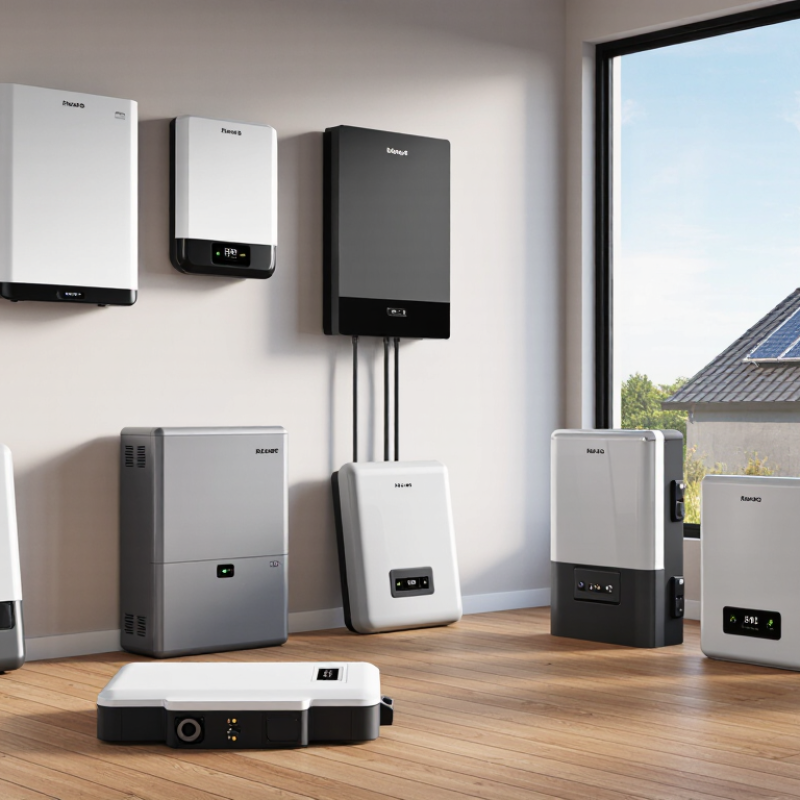
Ten Leading Solar Batteries for Home Energy Storage
Choosing among the ten leading solar batteries for home energy storage requires more than comparing capacity. Usable capacity matters. So does cycle life, inverter compatibility, backup speed, and thermal protection. A 10 kWh battery may deliver less than 10 kWh after reserve settings and conversion losses. Small details become visible during a winter outage.
The International Energy Agency reports that global battery storage capacity must expand sixfold by 2030 to support clean-energy targets (IEA, Batteries and Secure Energy Transitions, 2024). For homeowners, this supports a practical trend: modular systems can grow with electricity demand. NREL research commonly models lithium-ion systems near 85% round-trip efficiency, though installation design changes real results (NREL, Storage Futures Study). Look for documented efficiency, not only marketing claims. It is easy to overbuy.
The ten leading options should also be judged by usable storage, warranty conditions, operating temperature, and service access. Safety testing under standards such as UL 9540 and UL 9540A provides useful evidence, but certification does not guarantee a perfect installation. A shaded garage with stable temperatures may protect performance better than a hot exterior wall. That difference is concrete. However, household load profiles remain uncertain. A family using electric heating may empty a battery before dawn, while a smaller home may waste unused capacity. My ranking would therefore favor transparent test data over impressive headline capacity. Some published specifications still leave important questions unanswered.
Comparing Battery Capacity, Efficiency, Warranty, and Cost
10 Best Solar Batteries for Home in 2026
Choosing among the 10 best solar batteries for home use requires more than comparing storage size. Usable capacity shows how much electricity remains available after safety reserves. A 10 kWh battery may deliver only 8 to 9 kWh daily. Efficiency also affects real savings. Systems rated around 85% to 95% round-trip efficiency waste less solar power during charging and discharge. That difference becomes noticeable during cloudy weeks.
Warranty terms deserve careful reading. Look beyond the headline duration. Check guaranteed capacity, cycle limits, and annual throughput allowances. A battery with a 12-year warranty may retain only 60% of its original capacity at the end. Temperature limits matter too. A garage reaching 40°C can reduce performance and shorten service life without proper ventilation.
Cost comparisons should include installation, controls, permits, and possible electrical upgrades. Price per usable kilowatt-hour is more useful than purchase price alone. A larger battery is not automatically better for a small household. Daily consumption, evening loads, and backup goals should guide sizing. During home assessments, I have seen spreadsheets favor oversized systems that rarely filled. That mistake is easy to make. Real usage data from smart meters usually gives a clearer answer. Performance estimates remain imperfect, especially when weather, shading, and seasonal demand change.
How to Select, Install, and Maintain the Right Solar Battery
Selecting among the 10 best solar batteries for home use in 2026 starts with your household’s real energy pattern. Check daily consumption, evening loads, outage frequency, and available wall space. A battery rated at 10 kWh may deliver less usable energy after reserve settings and conversion losses. The IEA’s Batteries and Secure Energy Transitions report recorded more than 40 GW of new battery storage worldwide in 2023. That growth shows strong confidence in storage, but it does not make every battery suitable for every home.
Ask for usable capacity, continuous output, peak output, round-trip efficiency, warranty terms, and expected cycle life. NREL’s 2024 residential solar-storage benchmark shows that installation design strongly affects total system cost. Get a site-specific quotation, not a generic online estimate. A qualified electrician should verify panel capacity, main-service limits, grounding, clearances, and local inspection requirements. Follow NFPA 855 guidance and the equipment’s certified installation instructions. Poor placement near heat or moisture can shorten service life.
Maintenance is usually simple. Keep ventilation paths clear, watch the monitoring app, and schedule professional inspections after severe weather. Clean the area, not the battery enclosure. Do not open it yourself. I would avoid sizing only for a dramatic blackout scenario; daily cycling often creates better value. My own caution is practical: forecasted savings can look precise, while tariffs, shading, and future electricity use remain uncertain. Leave room for error.